Decolonisation
How to Write a ‘Positionality Statement’ (and Why Positioning Identity Matters in Decolonising Research and Knowledge Production)

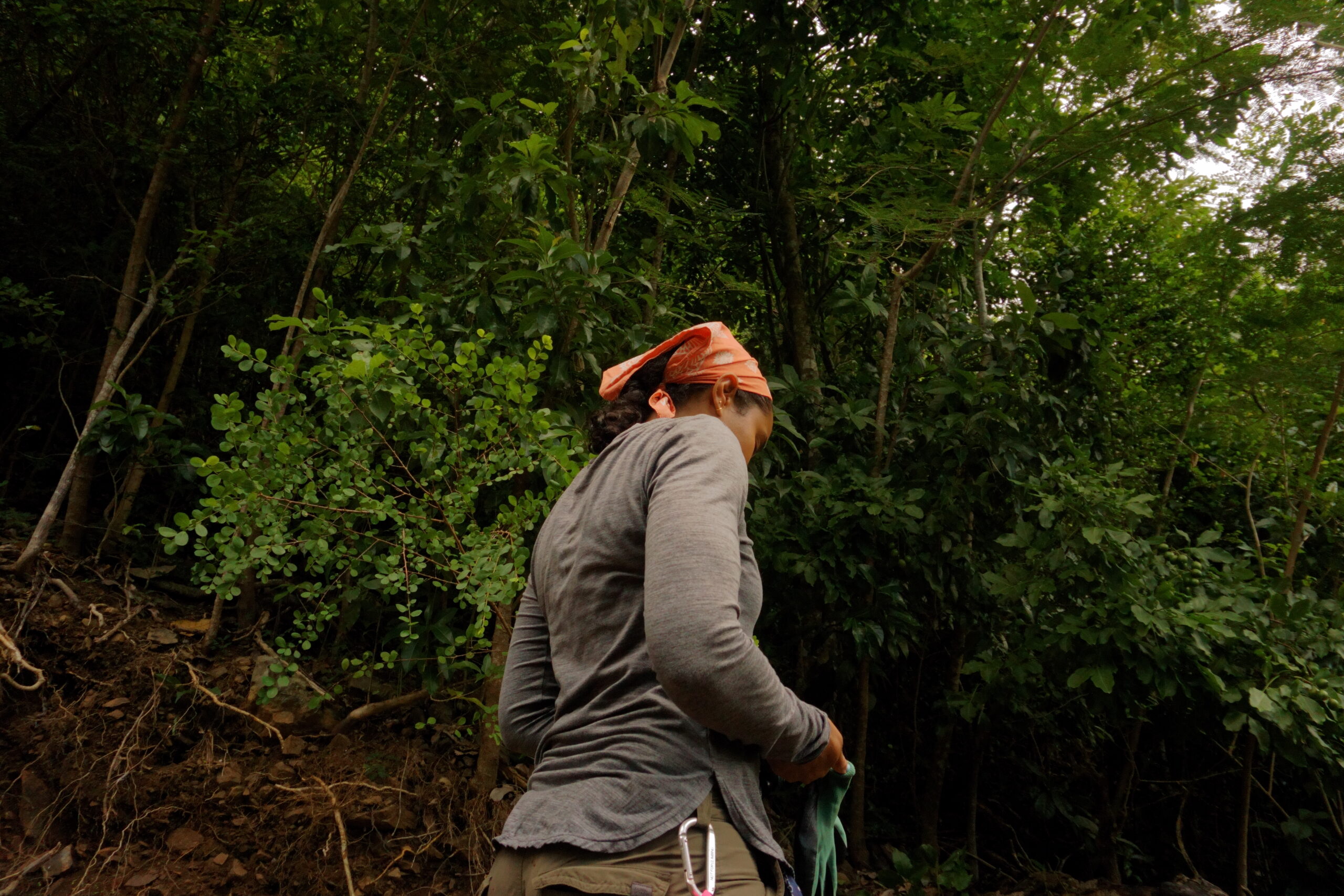
St. Croix is among the smallest islands in the Caribbean, a thin strip of land that unspools like thread into the fluorescent turquoise sea. It is 500 times smaller than Cuba and 42 times smaller than Puerto Rico. Despite this diminutive size, St. Croix was the fourth-largest sugar-producing island in the Caribbean during the 19th century. By 1820, Danish colonisers had clear-cut many of the old-growth forests that had blanketed the island, replacing them with more than 200 sugar plantations that relied on the labor of enslaved Africans. To produce such enormous sugar outputs, Danish colonisers maintained a regime of terror and brutality, forcing enslaved people to work without breaks in the sweltering heat, harvesting, cutting, and processing the spike-covered sugar plant.
Dr. Suzanne Pierre is the founder of the Critical Ecology Lab, an environmental start-up and “people’s think tank” based in Oakland, California. When we speak, she is adamant; it is impossible to understand the climate crisis without recognising the context of enslavement and colonisation that produced it. “I believe that climate change is the physical, biological and chemical manifestation of centuries of injustice,” she tells me.
Now, the Critical Ecology Lab is attempting to map those centuries of injustice through a visionary research project. The Ecological Scars of Plantation Slavery initiative seeks to reveal how centuries of violence against both enslaved people and the Earth has diminished St. Croix’s ability to respond to the climate crisis today.
Leading independent research on St. Croix offered the opportunity to tell a different story, rooted in the lived experience of colonised people whose experiences were often invalidated or ignored.
Dr. Pierre’s hypothesis is that Danish colonisers are responsible for destroying a major carbon sink. Old-growth forests thick with giant baobab and tamarind trees once served as a major buffer against climate change, capturing carbon dioxide and transforming it into oxygen. Without these old-growth forests, the island is vulnerable. This reality is compounded by the fact that St. Croix has contributed less than one percent of global carbon emissions yet has been repeatedly impacted by climate intensified hurricanes, sea-level rise, and coral bleaching.
The project began in 2022. Two scientists, Dr. Justin Dunnavant and Dr. Ayana Flewellen, invited Dr. Pierre to St. Croix to participate in an archaeological dig on the island. During the trip, Pierre immersed herself in the world of St. Croix’s scholars, professors, artists, and activists, who encouraged her to explore the questions that would later form the foundation of the Ecological Scars of Plantation Slavery project.
Pierre is of Caribbean descent — she is the daughter of a Haitian father and a South Indian mother — and had felt increasingly disillusioned with traditional academia. Universities too often tell an incomplete story about what caused the climate crisis, and therefore how to address it. Leading independent research on St. Croix offered the opportunity to tell a different story, rooted in the lived experience of colonised people whose experiences were often invalidated or ignored. The people she met encouraged her to follow the threads of her curiosity. “St. Croix chose me back,” she said.
Critical Ecology Lab’s research began on one plantation, but as scientists and community members learned about the project, they invited the team to work on sites across St. Croix. Their research is currently taking place on more than 15 former plantations throughout the island, covering hundreds of acres. Such an enormous scope has strengthened the project’s “comparative power,” allowing the scientists to measure variables that traditional research institutions might ignore. Critical Ecology Lab measures who owned the plantations, how many enslaved people were forced to live there, and the total amount of sugarcane that the land produced over hundreds of years. All of these inputs represent the intensity, and therefore negative impact, of enslavement and colonisation on the land.
“When we look at 15 plantations who all had different levels of these historical features, we can compare them and say something about the role of, for example, forced labor as an important and overlooked variable in negative impacts on soil carbon,” Pierre said.
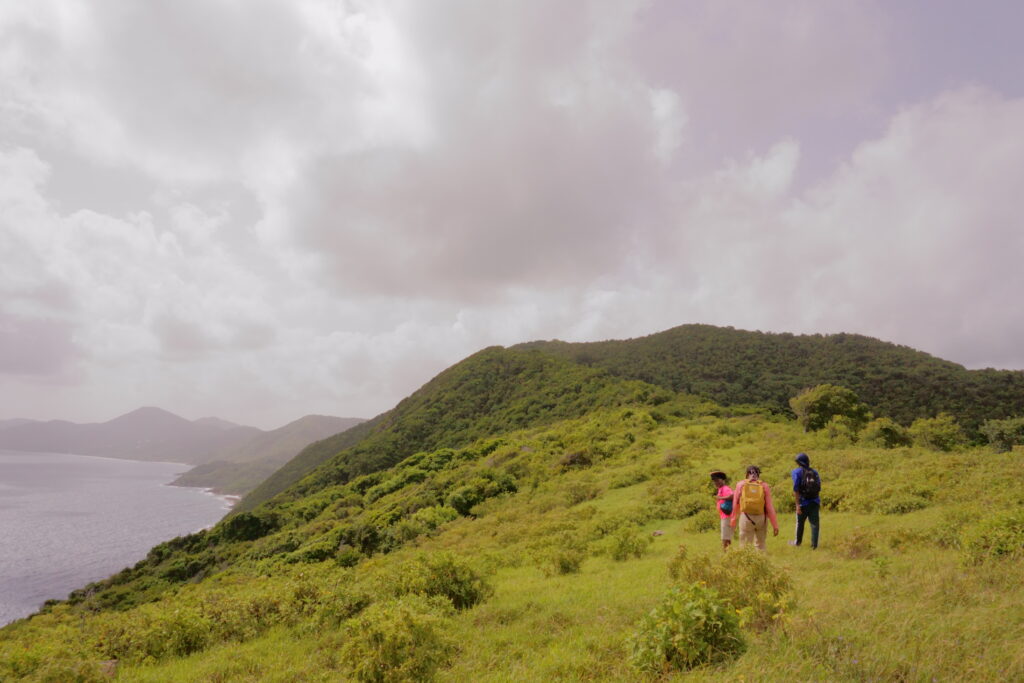
This archival data is paired with extensive scientific research. Last year, Pierre led a two-week research trip to St. Croix, with an all-women-of-colour team of scientists, including Pa-Shun Hawkins, Nautica Jones and Sophia Ramirez. They split into teams like “soil” and “vegetation” to fastidiously measure the impact of sugarcane plantations on the island’s ability to capture carbon. Each day, as the sun cracked open like an egg in the sky above them, they drove to another former plantation. In some areas, the trees had regrown, requiring them to hike for hours through thick vegetation while mosquitoes hummed around them. As they went, the scientists measured every aspect of the land’s ecology: the age and density of the trees, soil health, and the quantity of invasive species.
The days were demanding. Hawkins was in charge of soil research, which required her to roll an enormous, refrigerated suitcase deep into the forest every morning. She meticulously placed different soil samples into vials, staying up late to label them one by one when she returned to the glow of her computer screen. Those samples now form the basis for her research at the University of California, Los Angeles, where she is measuring their various ability to retain carbon.
The days could be emotionally intense, too. Jones said that, a few times, they came across series of stones placed in perfect circles, the signs of a gravesite. When this happened, they would gather together and attempt to honour the person, or people, who were buried beneath them. But language seemed incomplete, an empty vessel, when they did not know the name of the person they were honouring. It was another example of the ways enslaved people’s stories and lives have been erased. At the end of most days, the team ran into the arms of the sea, bathing themselves in the cleansing salt water.
The choice to build an all-women research team is a form of feminist climate science, a practice that recognises how gender, race, and colonialism intersect in both the causes and the consequences of environmental destruction.
Amid the intensity of the work, or perhaps because of it, the scientists developed an intimate bond. “I didn’t imagine a space in conservation or science where I could come as myself and that’s enough,” Ramirez said. At twenty-one, she was the youngest of the group, and recently graduated from the California State Polytechnic University, Pomona.
The choice to build an all-women research team is a form of feminist climate science, a practice that recognises how gender, race, and colonialism intersect in both the causes and the consequences of environmental destruction. Women of colour, particularly in the Global South, bear disproportionate impacts from climate change while remaining excluded from the scientific institutions tasked with addressing it. This feminist approach extends beyond team composition into methodology itself. The Critical Ecology Lab prioritises community relationships over extractive research practices, centring local knowledge alongside scientific measurement.
Their final research report will be published next year. Pierre hopes that it will support a growing movement, led by women of colour like Barbados’ Prime Minister Mia Mottley, that requires wealthy nations to pay for the ongoing climate harm they have caused. This would upend centuries of what the scholar Farhana Sultana has called “climate coloniality,” or the inequitable impacts of the climate crisis that seep “through everyday life across space and time, weighing down and curtailing opportunities and possibilities through global racial capitalism, colonial dispossessions, and climate debts.”
In addition to the warm welcome Dr. Pierre experienced on St. Croix, she selected to work on the island because of the very specific relationship it has to Europe. Danish colonisers, she notes, had a stake in the country for centuries, extracting billions of dollars of wealth that continues to propel their economy today. “When we are able to enumerate the ways that Danish profit influenced climate vulnerability, we are building a table where a certain conversation can be had,” she said. “That table doesn’t exist yet.”
Pierre wants her research to validate the experience of colonised people, who have spent centuries resisting and warning of the conditions that have produced climate collapse. “There’s something that we are doing at the Critical Ecology Lab that sits between emotional healing and intellectual galvanisation. We’re trying to be a catalyst that says what you’ve experienced is real. What your ancestors experienced is real. And here’s the proof that you can use in your advocacy and in your demands for justice.”
The land we live and work on always was, and always will be, Aboriginal land. We pay our respects to the Traditional Custodians of Country throughout Australia and acknowledge the ongoing leadership role of Aboriginal & Torres Strait Islander communities in preventing violence against women. We also acknowledge Traditional Custodians of the lands where EQI works around the world.
Read MoreYou have been logged out.
"*" indicates required fields