Preventing VAWG
Preventing VAWG
Southeast Asia GBV Prevention Platform: Advancing Regional Collaboration to Prevent Gender-Based Violence
The Equality Institute is a partner in the Southeast Asia Gender-Based Violence (GBV) Prevention Platform, a major regional initiative supported by the Australian Government and led by the Platform Secretariat in collaboration with Cowater International and Social Development Direct. Working alongside the United Nations Joint Programme on Gender-based Violence Prevention in Southeast Asia, implemented by UN Women and UNFPA, the Platform brings together governments, civil society, regional organisations and international partners to strengthen collective efforts to prevent GBV across the region.
Guided by principles that prioritise locally driven leadership, evidence-based action, intersectionality and survivor-centred approaches, the five-year initiative (2024–2029) advances coordinated advocacy, dialogue, policy and programming to strengthen GBV prevention across Southeast Asia.
EQI’s Role
As the strategic communications partner for the Southeast Asia GBV Prevention Platform, EQI:
- Led the development of the platform’s communications strategy and framework
- Facilitated co-creation of messaging, values and narrative framing with regional stakeholders
- Developed the brand identity, including name, tagline and visual system
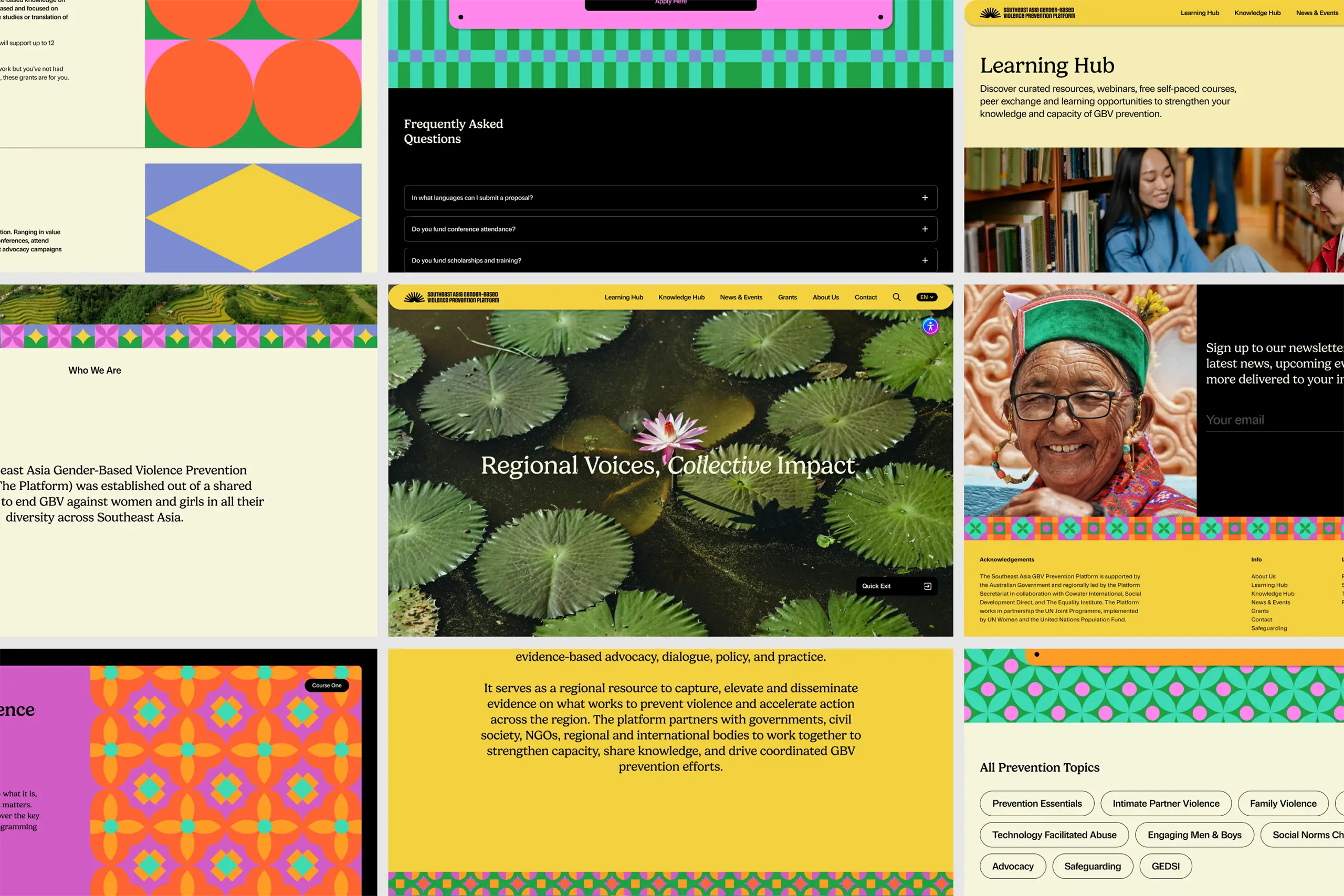
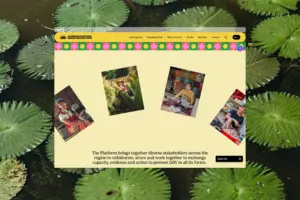
- Designed and built the platform’s website
- Established communications systems, channels and approval processes
- Delivered a suite of communications tools and templates for implementation
- Provided ongoing advisory support, mentoring and capacity strengthening to the Secretariat
The Challenge
The Platform was established entirely from scratch, alongside a deliberate process of collaboration to ensure strong regional ownership from the outset. As the partner responsible for strategic communications, EQI led the development of the communications strategy and brand identity, including the platform’s name and tagline, the creation of the website, and the establishment of communications systems and approval processes.
This work was undertaken in close partnership with all program partners, the newly forming Secretariat and stakeholders across Southeast Asia. It unfolded in parallel with the recruitment and establishment of the Secretariat itself, with EQI providing ongoing advisory input, mentoring and coaching throughout.
The challenge was not simply to develop communications products, but to create a shared foundation for a new regional platform, ensuring the communications approach reflected regional priorities, built trust across stakeholders and supported long-term ownership by the Secretariat.
The Solution
A Co-Created Communications Strategy
EQI developed a comprehensive communications strategy that functioned as both a strategic framework and a practical roadmap for the Platform’s development. Designed through a collaborative process with partners and the Secretariat, the strategy was built to:
- Align communications clearly with the platform’s objectives and theory of change
- Provide transparent and consistent communications to build trust and manage risk
- Strengthen coherence across messaging, positioning and engagement channels
- Embed regional perspectives through validation with stakeholders across Southeast Asia
This work resulted in a nine-step communications framework, developed iteratively over several months and validated with regional stakeholders. The process strengthened regional ownership and ensured the strategy reflected both local realities and shared ambitions.
Shared Messaging and Strategic Objectives
Through workshops and collaborative sessions with partners and the Secretariat, EQI helped define a shared set of communications objectives and core messaging for the Platform.
These objectives guide all communications activity:
- Inform – building awareness of effective GBV prevention approaches
- Engage – fostering collaboration and dialogue across the region
- Influence – advocating for evidence-based policy and programming
- Learn – strengthening capacity through accessible knowledge and evidence
- Demonstrate – sharing region-specific insights generated by practitioners
Alongside this, EQI facilitated the development of shared language and narrative framing for the platform, including clear definitions of prevention, the platform’s vision and purpose, descriptions of workstreams and positioning for the Secretariat.

Building a Collective Brand Identity
The platform’s brand identity was developed as a collective asset through a highly collaborative design process. EQI facilitated consultations with partners and regional stakeholders to define the platform’s name, tagline, visual identity and acknowledgements, ensuring the brand reflected shared values and resonated across the region.
A comprehensive brand system was then developed, including a brand book and a full suite of communications tools such as presentation templates, report templates, social media assets, email signatures and a Canva brand toolkit. Guidance on tone, messaging and language ensured the Secretariat and partners could communicate consistently and confidently.
Website Development and Communications Systems
EQI also led the development of the platform’s website through an iterative and collaborative process. Structured feedback and validation from the Secretariat and partners at key stages ensured the website aligned with the communications strategy and brand identity while remaining accessible and practical for regional engagement.
The strategy also included recommendations for implementation systems, including communications channels, metrics, team structure, and guidance on which communications roles and skills should be embedded within the Secretariat.
Accessibility and translation were prioritised throughout, ensuring the platform’s communications systems could effectively engage stakeholders across Southeast Asia.
Capacity Strengthening
Across all of this work, EQI provided ongoing advisory support, mentoring and coaching to the Secretariat. This accompaniment approach ensured communications capacity was built alongside the delivery of outputs, supporting regional leadership and long-term sustainability.
“I am deeply grateful for the opportunity to work alongside the EQI team, whose brilliance and reliability have been central to everything we’ve achieved so far. Each of you has been exceptional, bringing expertise, creativity, and unwavering commitment that has elevated this website, and our strategic communications more broadly, to the level of excellence. It has been a privilege to share this journey with such a remarkable team, and I could not be prouder of what we’ve accomplished together.” – Trina Howley, Cowater International
The Impact
The communications strategy was delivered on time and formally approved by Cowater International and the Australian Government’s Department of Foreign Affairs and Trade (DFAT) with minimal feedback, reflecting strong alignment with program expectations.
The strategy, brand identity and full suite of communications tools were widely endorsed by partners and the regional Secretariat, who highlighted the value of the collaborative and regionally grounded approach. These tools have now been fully handed over to the Secretariat, which is confidently leading implementation and ongoing communications for the Platform.
Following extensive stakeholder engagement, the website was launched successfully and on budget. While the launch timeline was adjusted to align with the recruitment of the Secretariat, the revised schedule was agreed and delivered in full. The website progressed through final approvals without requested changes and was approved immediately by DFAT.
Together, these foundations have established a coherent and sustainable communications system for the Southeast Asia GBV Prevention Platform, supporting regional leadership, strengthening collaboration across stakeholders and helping position the Platform as a trusted voice for evidence-based GBV prevention across Southeast Asia.
Visit the site here to learn more.