Gender Equality
Prevention is Possible with Dr. Emma Fulu
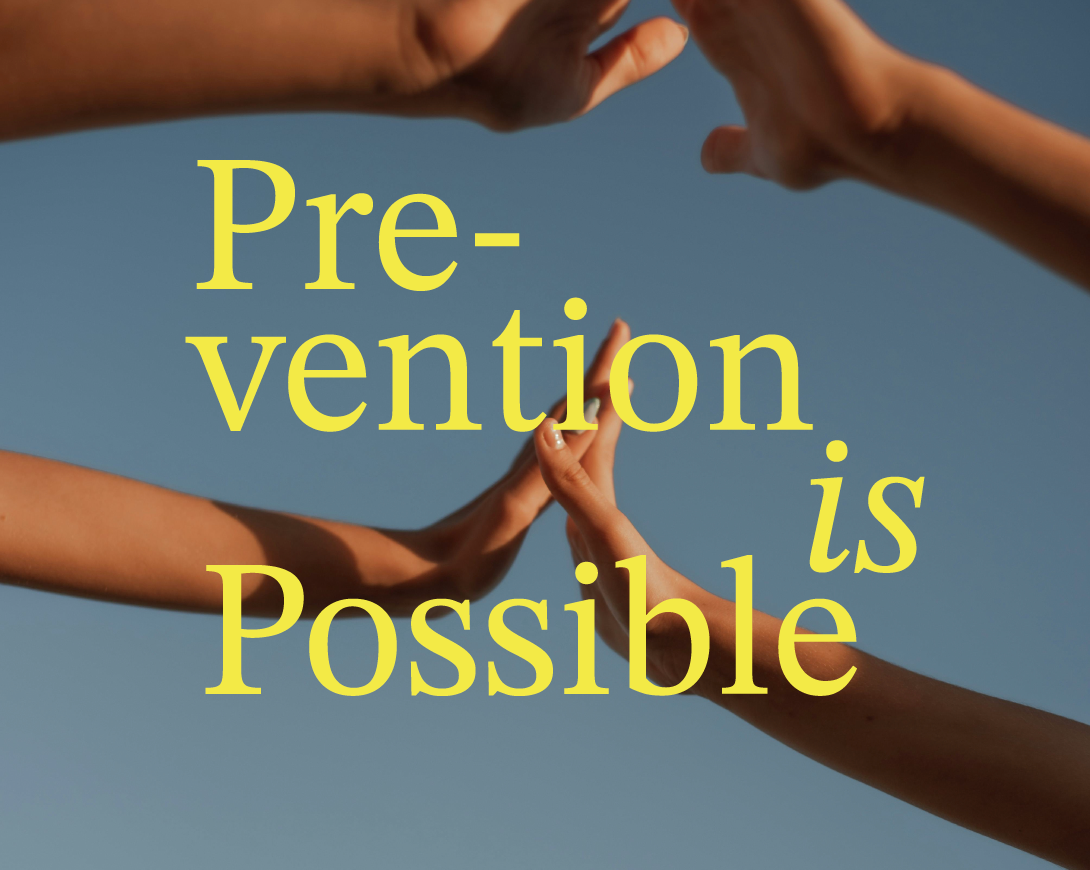

Men’s violence against women and girls remains one of the most urgent challenges of our time – but it is not inevitable.
Through Prevention is Possible, our new interview series, we explore the current landscape of the global prevention movement and how we can work together to end violence against women and girls, through conversations with the leaders who are driving this important work forward.
Our third interview in this series is with Tarang Chawla, an award-winning speaker, writer, anti-family violence advocate, and recovering lawyer. Tarang is the co-founder of Not One More Niki – a grassroots non-profit working to end men’s violence against women – and he serves as Commissioner as the Victorian Multicultural Commission, where he works to bring the voices and lived experiences of culturally diverse people to policymakers.
EQI: Tarang, if you feel comfortable, can you share how you came to do the work you do?
TARANG: I came to this work through the worst thing that’s ever happened to my family. In 2015, my younger sister Nikita was murdered by her partner when trying to end the relationship. She was twenty-three. She was ambitious, generous, and deeply loved. Her death changed my family forever.
At first, I didn’t think of myself as “entering the sector” and I still sit at odds with that concept because men’s violence is pervasive and doing this work doesn’t have an “off switch” for lived experience advocates. Also, I was grieving, angry and trying to make sense of how someone so loved as Niki could be taken in such a violent yet preventable way.
I knew early on that what happened to Niki was not just an individual tragedy, but that it sat within a much larger social problem: the entitlement some men feel to control women, the warning signs we minimise, the excuses we make, and the systems that too often respond after the worst has already happened instead of trying to prevent male violence.
That’s what drew me into prevention – to interrogate and change how violence becomes possible long before it becomes visible. I wanted to talk to men, families, workplaces and institutions about their role in changing the conditions that allow violence to flourish.
I still carry my sister into this work every day. But I have also learned that this work cannot only be about grief, and that there’s a hopeful component to it. And it also has to be about responsibility, power, culture, and the possibility of change.
EQI: What were the major challenges to family/gender-based violence prevention when you first began working in this space, and how does this compare to the landscape of violence prevention in 2026?
TARANG: I started speaking out in 2015. Victoria was holding a Royal Commission into Family Violence, and Rosie Batty had been named Australian of the Year, following the murder of her son, Luke, by his father.
Back then, men’s violence was still too often understood through an incident-based lens. Public attention would sometimes spike after a woman was killed if the victim was deemed “perfect” enough, there would be grief and outrage, and then the conversation would either move on or narrow very quickly to the individual perpetrator: Was he a monster? Were there warning signs? Why didn’t she leave?
Those questions make male violence look like an aberration rather than the predictable outcome of gender inequality, entitlement, coercive control, institutional failure and cultural minimisation. At the time, even getting people to understand the difference between responding to violence and preventing violence was a challenge.
The burden of prevention was also entirely on women and gender diverse folk. Women were told to assess risk, leave safely, report earlier, choose better and protect themselves. Meanwhile, men’s behaviour, institutional accountability and the broader conditions that enable violence were not always examined with the same intensity, if at all.
The challenge is to hold both truths at once: boys and men are shaped by gender norms that can harm them, but they are also positioned within gender relations that can give them power over women. Prevention has to be able to speak to men’s humanity without recentring men’s hurt as the primary problem to be solved.
In 2026, the landscape is much more developed. There is stronger recognition of primary prevention, coercive control, technology-facilitated abuse, workplace responsibility, intersectionality and the importance of lived experience. The community now has better frameworks, better language and a deeper understanding that violence is not only physical and not only private.
But the work is also more complex now. The backlash is more organised such that it’s perhaps better to articulate the resistance as a “countermovement” as Professor Steven Roberts and Dr Stephanie Wescott from Monash University suggest. Online misogyny has become more sophisticated and more commercialised. Young men are being targeted by influencers who turn insecurity into grievance and grievance into identity, so misogyny now has new avenues to reach boys and radicalise them. At the same time, prevention remains underfunded, unevenly implemented and vulnerable to political cycles.
So the challenge has shifted, but not diminished in scale. It’s no longer just about getting people to care because I think that now many people do care. The harder question is whether we’re willing to act on what we already know: that prevention requires sustained investment, institutional courage, cultural change, and a much more serious focus on men’s behaviour before it escalates into harm that accounts for individual experience of men but does not obscure the structural reality of gender inequality.
EQI: What is working well to prevent family and gender-based violence, and what would you like to see more of a focus on in the future?
TARANG: What is working well is that prevention has become more capable of naming violence as socially produced, rather than simply individually enacted. That is an important shift. It moves us away from the idea that gender-based violence is caused only by a small number of deviant men, and towards a more serious account of the gendered, institutional and cultural conditions that make some forms of harm more likely, more permissible, or more easily excused.
That said, I think the next phase of prevention requires more intellectual honesty about complexity. One tension I see is in the growing focus on boys’ and men’s wellbeing. I think that work matters. Men’s loneliness, shame, disconnection and mental distress are real, and we should take them seriously. But if wellbeing work is not grounded in a feminist analysis of power, it can drift into a comfort project for men rather than a safety project for women. It can explain men’s pain without adequately examining men’s entitlement.
The challenge is to hold both truths at once: boys and men are shaped by gender norms that can harm them, but they are also positioned within gender relations that can give them power over women. Prevention has to be able to speak to men’s humanity without recentring men’s hurt as the primary problem to be solved.
I would also like to see a more serious engagement with class and race. Masculinity is not produced in the abstract. It is shaped through material conditions: employment, housing, family pressure, migration, racism, policing, peer status, education, sport, pornography and digital culture. A middle-class white man, a working-class migrant boy, an Aboriginal man, and a young man racialised as threatening will not experience masculinity, authority, shame or vulnerability in the same way.
None of this excuses violence. But it does make prevention more precise. If we treat “men and boys” as a single undifferentiated category, we will miss how different forms of masculinity are produced, rewarded and defended.
The work ahead is not just more awareness. It’s better diagnosis. Where is entitlement being formed? Where is harm being minimised? Which men are protected? Which men are pathologised? And what would it take to change the conditions that make violence imaginable before it becomes inevitable?
EQI: What does responsible allyship from men look like?
TARANG: Allyship cannot simply mean being “one of the good ones”. That framing is too passive, too individualised, and too self-congratulatory. It allows men to imagine that because they are not personally violent, they are somehow outside the problem.
But men are not outside this problem. Even men who do not use violence are still shaped by gendered systems that often ask women to manage men’s emotions, absorb men’s entitlement, anticipate men’s reactions, and do the social labour of keeping everyone safe.
So responsible allyship has to move from identity to practice. The goal is not for men to be praised for not being violent. The goal is for men to become active participants in changing the conditions that allow violence, coercion and disrespect to be normalised.
As men, we must ask ourselves difficult questions: where have I benefited from the very culture I claim to oppose? When have I expected women to educate, comfort, forgive, or make my growth easier? When have I confused being held accountable with being attacked?
In practice, that means speaking to other men, especially when there is no public reward for doing so. It means challenging contempt, sexual entitlement, misogynistic humour and the minimisation of controlling behaviour. It means not treating women’s fear as irrational when that fear has been socially produced through repeated experiences of harassment, dismissal and violence.
But responsible allyship is also reflective. As men, we must ask ourselves difficult questions: where have I benefited from the very culture I claim to oppose? When have I expected women to educate, comfort, forgive, or make my growth easier? When have I confused being held accountable with being attacked?
EQI: Have there been any particularly profound moments over your time as an advocate that have significantly changed the dynamic or direction of your work?
TARANG: In the early years, I think I hoped that if people understood what happened to Niki, they would care enough to change. And many people did care. But care is not the same as action. That changed the direction of my work. I became less interested in simply asking people to feel something, and more interested in asking what that feeling demands of them.
Another profound shift has been recognising how unevenly violence is seen. Some victims are quickly understood as innocent, respectable and worthy of public grief. Others are scrutinised, racialised, disbelieved or forgotten.
As someone from a migrant background, and as someone who works across multicultural communities, I am very conscious that public conversations about gender-based violence can still reproduce hierarchies of whose pain is made visible and whose is treated as culturally specific or peripheral.
I have also been changed by speaking with men and boys. I have met many who genuinely want to do better, but who are caught between competing scripts: one that invites them into emotional honesty, respect and accountability, and another that tells them feminism is the source of their pain. That has made me more committed to work that is honest about power, but also strategic about persuasion.
EQI: What gives you hope or galvanises you in the mission to end gender-based/family violence?
TARANG: What gives me hope is seeing people refuse to accept violence as inevitable. I see it in survivors who turn pain into advocacy, often while carrying costs the public never sees. I see it in young people who are more fluent in conversations about consent, gender and power than many adults give them credit for. I see it in men who are beginning to understand that gender equality is not an attack on them, but an invitation to live with more honesty, connection and freedom.
I also find hope in the fact that prevention work is becoming more precise. We are getting better at naming patterns earlier: coercive control, technology-facilitated abuse, institutional betrayal, backlash, and the everyday entitlement that sits upstream from harm. Better diagnosis does not solve the problem on its own, but it gives us a stronger basis for action.
What galvanises me most is still my sister. Niki should be here. Every birthday, every family gathering, every ordinary day without her is a reminder that this work is not abstract.
In ten years, meaningful change would mean fewer women and children living with fear in their own homes. That has to remain the measure. Not better slogans, not more panels, not more statements of commitment, but material change in people’s lives.
EQI: What would meaningful change look like to you, in another ten years?
TARANG: In ten years, meaningful change would mean fewer women and children living with fear in their own homes. That has to remain the measure. Not better slogans, not more panels, not more statements of commitment, but material change in people’s lives.
It would mean boys growing up with a broader and healthier understanding of masculinity. Not one built around dominance, emotional suppression, sexual entitlement or control, but one grounded in care, respect, accountability, mutuality and freedom from the constant performance of rigid ideals in the “man box”.
It would mean men understanding prevention as part of everyday life, not as a specialist issue they can outsource to women, experts or the sector. It would also mean institutions moving earlier. For instance, workplaces would not wait for formal complaints before addressing cultures of harassment. Governments would fund prevention as core social infrastructure, not as a temporary response to public outrage that gets scaled back at the earliest opportunity. And, media organisations and digital platforms would be held accountable for the misogyny they amplify and profit from.


The land we live and work on always was, and always will be, Aboriginal land. We pay our respects to the Traditional Custodians of Country throughout Australia and acknowledge the ongoing leadership role of Aboriginal & Torres Strait Islander communities in preventing violence against women. We also acknowledge Traditional Custodians of the lands where EQI works around the world.
Read MoreYou have been logged out.
"*" indicates required fields