Gender Equality
Prevention is Possible with Dr. Emma Fulu
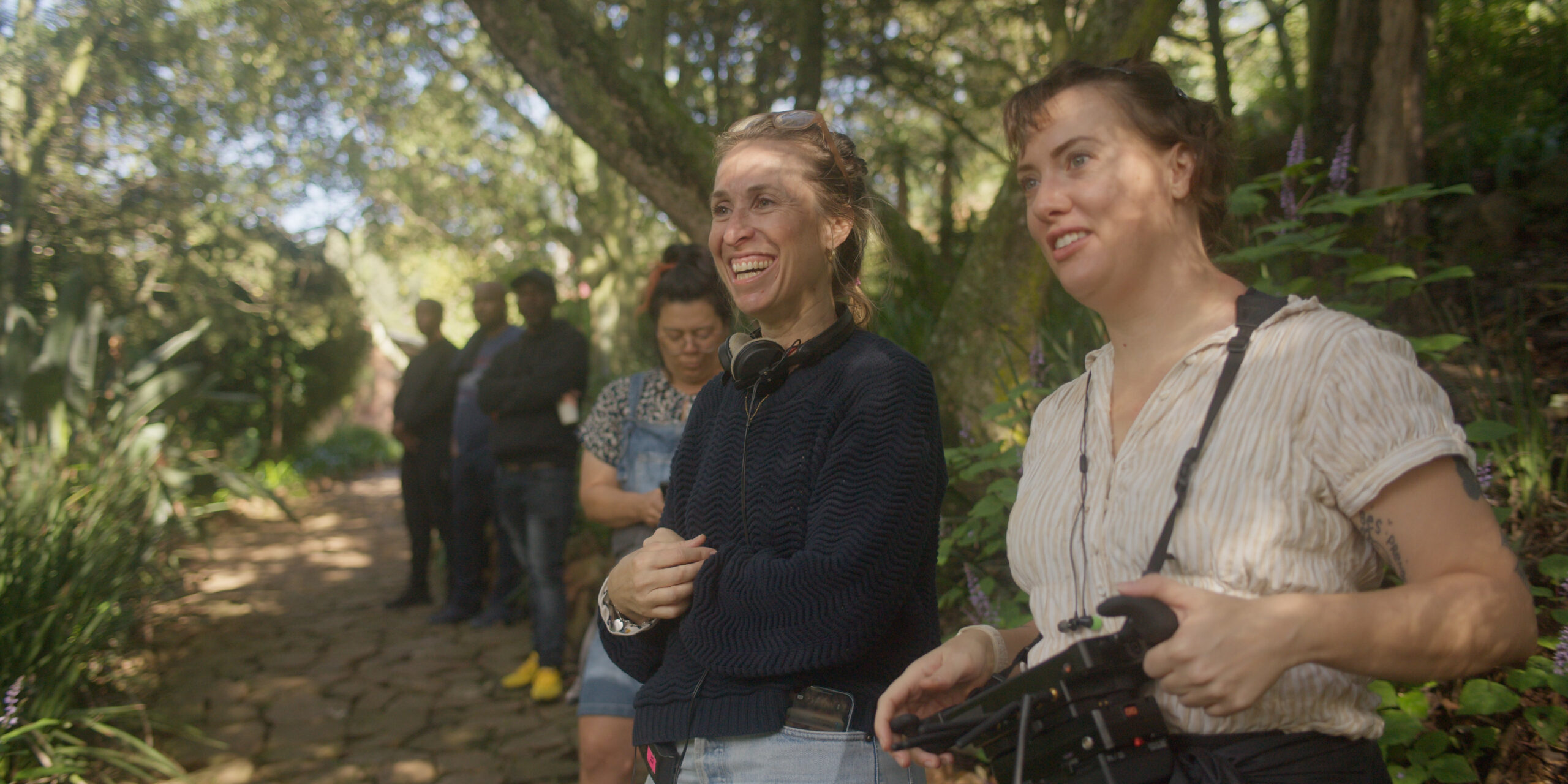
Silenced Producer Blayke Hoffman and Director Selina Miles. Photo credit: Anna McGirr
Silenced is the essential new film from International Emmy Award-winning filmmakers Selina Miles and Blayke Hoffman, exploring the realities of gender-based violence and the silencing of survivors through the weaponisation of defamation laws by alleged perpetrators.
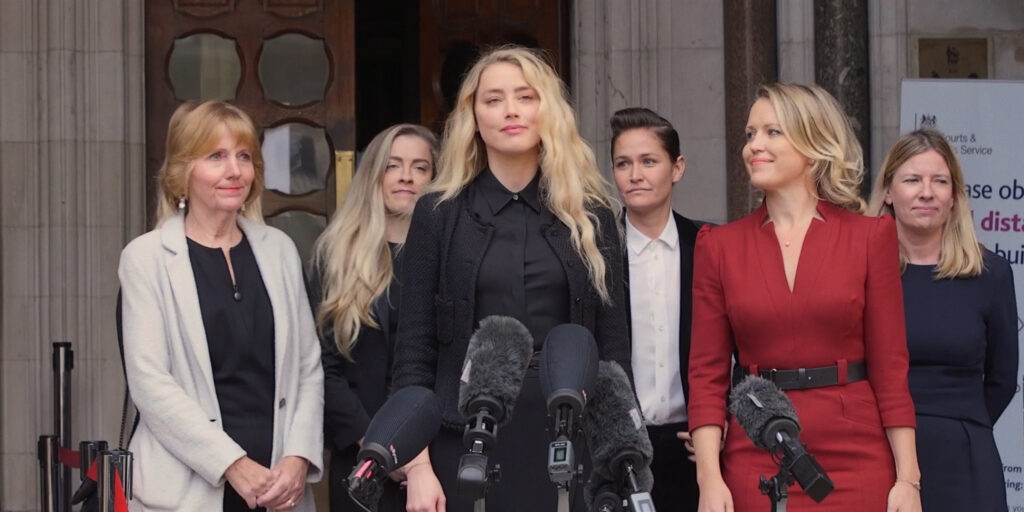
The film, which shares the perspectives of women and journalists at the centre of high-profile legal battles across the globe, has international human rights lawyer Jennifer Robinson takes audiences on an exploration of how the legal system is used to intimidate, discredit and ruin survivors, and the journalists who report their stories.
A powerful and timely documentary that challenges the devastating flaws maintaining the status quo within the justice system — we had the privilege to chat with the producer of Silenced, Blayke Hoffman, about the making of the film.
EQI: Blayke, can you share what led you to making this film, Silenced?
BLAYKE: For me, the journey began in 2022. The Depp v Heard defamation trial was playing out in the US, and the criminal trial of Bruce Lehrmann in Australia, and I found the media and public discourse around both deeply troubling. People seemed to me to be losing sight of the issue, which was the violence that was perpetrated against the women at the centre of these cases — Amber Heard and Brittany Higgins. I kept hearing these antiquated tropes about women who speak out and thinking: haven’t we come further than this? Put simply, I felt a very deep sense of injustice.
I was also really interested in the work of human rights barrister Jennifer Robinson who had acted for Amber Heard in the much lesser-known UK defamation trial brought by Johnny Depp against The Sun newspaper where Mr Justice Nicol found that twelve of the fourteen cases of alleged violence against Amber Heard had occurred. So when Jen’s book, How Many More Women — which she wrote with her colleague Dr Keio Yoshida — came out, I rushed out to buy it.
Jennifer and Keio’s observations and insights into how the law operates and the imbalance that exists within the legal system when it comes to violence against women really opened my eyes, and I felt deeply motivated to build on their work by bringing this story to the screen.
EQI: How did you balance the responsibility of telling such a huge, crucial story with that of sharing people’s personal — often traumatic — experiences?
BLAYKE: We built the whole production around protecting the people in front of the camera, not around scale. That meant a small crew working under a legal, security and duty-of-care approach designed specifically for women who’d already been sued for speaking out. Every single person working on the project completed trauma-informed training with the Centre for Journalism and Trauma Asia Pacific, we coordinated legal counsel across every jurisdiction involved, and we accepted that what usually takes a production one week, could take five times longer. Choosing patience over speed wasn’t a scheduling decision — it was an ethical one.
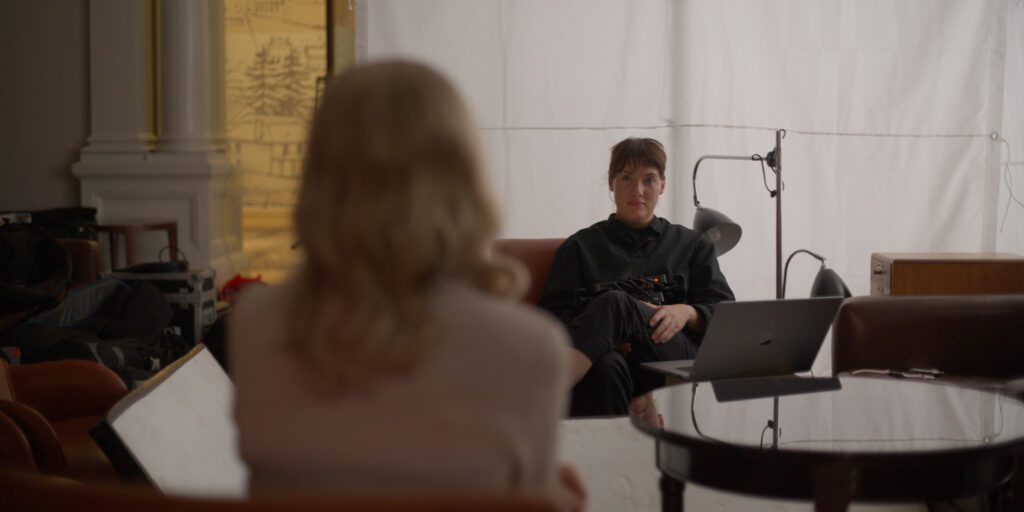
That same instinct shaped how we filmed: one camera, handheld by DOP Michael Latham, in the room with each woman, because that’s what gave them the safety to speak after years of cross-examination and public scrutiny. Director Selina Miles and Editor Bernadette Murray then had to take dense, multi-jurisdictional legal material and shape it into something coherent and human — testimony that shows these women, across completely different legal systems, had all lived the same story.
EQI: Silenced arrives at a time when violence against women and misogyny continues to rise. How do you think the film speaks to this moment?
BLAYKE: I started this project in 2022, we’re releasing it now in 2026, and if anything, the issue feels even more urgent. It’s deeply sad to say that four years on, the statistics aren’t getting better — and that makes this film both very timely and, unfortunately, necessary.
The problem is, it won’t get better unless we can talk about it. And how can we talk about it when there are so many forces working against that conversation? In this case, it’s the legal system — but it’s also online platforms and the algorithms that have a chilling effect on women who speak out.
That has to change. We can’t grapple with the problem if we can’t talk about it.
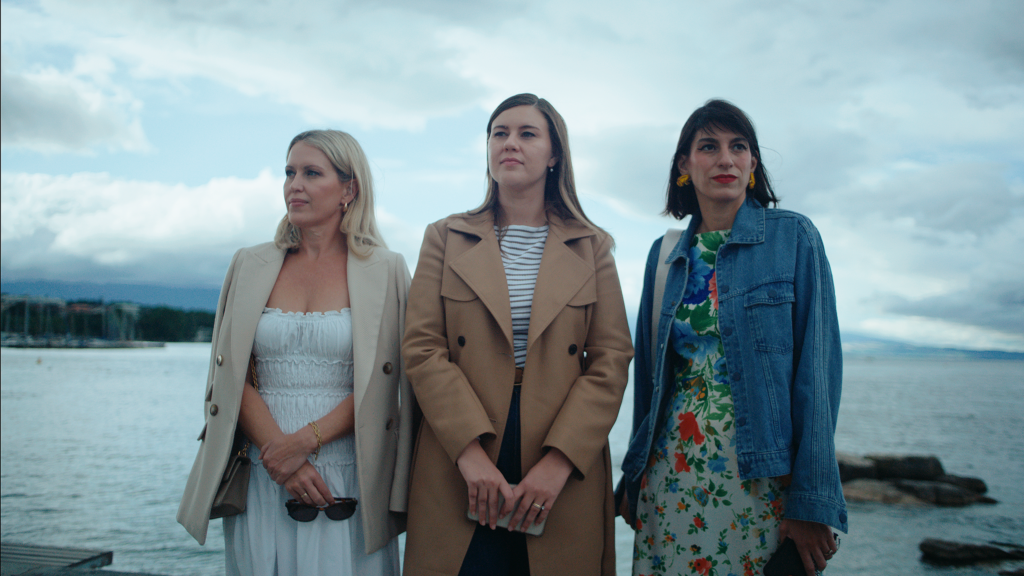
EQI: The film follows three women — Amber Heard, Brittany Higgins and Catalina Ruiz-Navarro — whose stories unfolded in very different countries and contexts. What connected their experiences for you?
BLAYKE: This film is not about one woman, one case or one jurisdiction. Our intention was to thread together defamation actions across jurisdictions to expose a single global pattern — women empowered by #MeToo to speak out, and the journalists reporting them, now facing legal backlash. Robinson and Yoshida’s firsthand casework gave the film exclusive access: for several women, it was the first time they had spoken since their alleged perpetrators took legal action, making clear the public cases were the tip of a larger iceberg.
EQI: Why do you think we still have so much difficulty believing women when they come to us and say they’ve experienced something traumatic?
BLAYKE: Our starting position should simply be: believe women.
The disbelief we so often see stems from holding women to unattainable standards — standards rooted in antiquated tropes that are deeply embedded in our society. Particularly when it comes to gender-based violence, we still hear questions like: What was she wearing? How much had she had to drink? What did she have to gain?
What the film makes clear is that there is no personal gain in speaking out. These women are put through hell. The courage it takes to come forward — knowing what awaits you — is extraordinary. And yet we still question their motives.
It’s time we retired those tropes and replaced them with something far simpler, and far more just: belief.
EQI: What impact would you like Silenced to have on audiences? What do you hope the film’s legacy will be?
BLAYKE: My hopes are both cultural and systemic.
On a cultural level, I hope the film sparks conversations — between friends, family, colleagues — about how we as a society treat women who speak out about gender-based violence. That shift in conversation is where change begins.
On a systemic level, I hope our impact campaign — which advocates for anti-SLAPP legislation to prevent the legal system being weaponised against public interest speech — can contribute to meaningful law reform. Not just in gender-based violence cases, but beyond.
If this film can help move the needle on both fronts, that is its legacy.
EQI: Would your younger self have benefited from seeing this film?
BLAYKE: My younger self often felt afraid to challenge the status quo — internalising the injustice I felt rather than having the confidence to take action or speak up.
I hope this film gives people the tools and the language to identify misogyny, inequality and structural imbalance, and the confidence to speak up and call out the tropes about women who speak out about gender-based violence.
I also think it helps younger women feel that they’re not alone. There are other people in this space speaking out and advocating, and that courage is deeply inspiring. It gives young people the confidence to be changemakers and to speak truth to power.
EQI: What advice would you give to emerging filmmakers and storytellers wanting to make work that contributes meaningfully to crucial subjects, like gender-based violence?
BLAYKE: These stories can be genuinely challenging — particularly from a duty-of-care and legal perspective, so preparation is everything.
You need to go in well-informed and with a great deal of patience. Think carefully about the people you’re working with and make sure everyone is aligned and committed to showing up with their best selves and looking after each other. The material is difficult, and the stakes are high.
My advice: Lead with empathy. Have good lawyers. Have good mentors. And most importantly, look after one another. The relationships I have formed from working on this project are treasured and lifelong.
EQI: Finally, when you imagine a more equal world, what do you see?
BLAYKE: Specifically in relation to gender inequality, I believe the key lies in educating young people to understand systemic issues and to push back against the status quo.
I imagine a world where the structural barriers that are so often invisible to the public are brought into the light. The only way we get there is if we continue to push, continue to fight, continue to advocate — and continue to tell these stories. To make the invisible visible.
And for me, that starts with the legal system. Right now, the scales are weighted too heavily toward reputation — at the expense of a woman’s right to free speech and to live a life free from gender-based violence. That imbalance must change. When I think about equality in relation to this specific issue, that is my aspiration: to balance the scales of justice.
It takes courage. It takes time. It takes enormous energy, and it can be incredibly fatiguing. But it matters.
I feel so privileged to be able to tell this story, and I hope that in doing so, we can pass the baton to younger people — to inspire them to take up the fight and carry it forward.
I encourage people to watch Silenced — it opens in cinemas nationally from September 3. Tickets and screening locations can be found at silenced-film.com as well as information around how to get support and to help take action.
Silenced opens in cinemas around Australia from Thursday 3rd September.


The land we live and work on always was, and always will be, Aboriginal land. We pay our respects to the Traditional Custodians of Country throughout Australia and acknowledge the ongoing leadership role of Aboriginal & Torres Strait Islander communities in preventing violence against women. We also acknowledge Traditional Custodians of the lands where EQI works around the world.
Read MoreYou have been logged out.
"*" indicates required fields