Gender Equality
'It won't get better unless we can talk about it': A Conversation with Blayke Hoffman, Producer of SILENCED
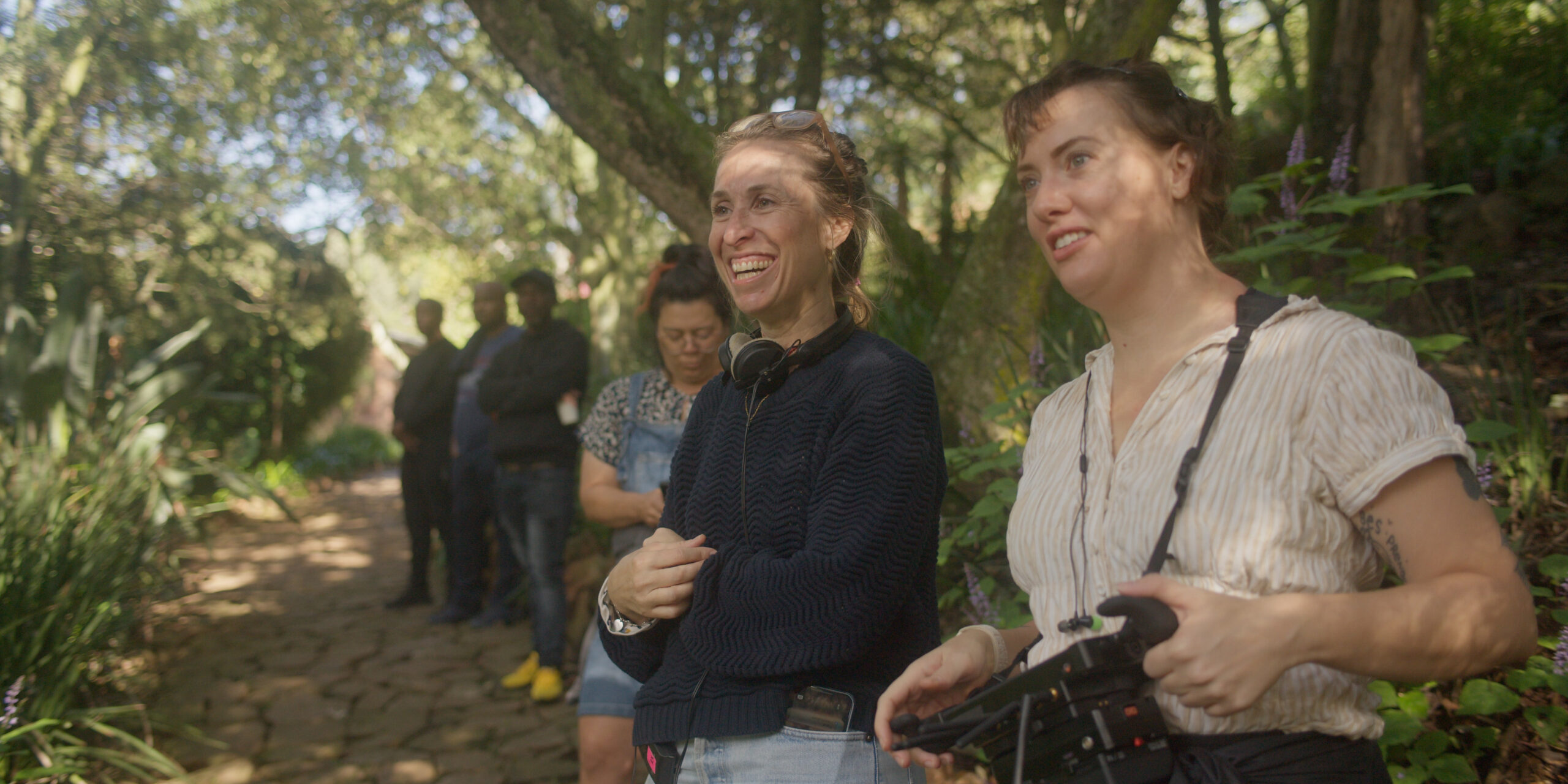

The idea that violence can be prevented sounds straightforward. But what do we actually mean when we talk about prevention? Which forms of violence are we trying to prevent, and are we looking closely enough at the systems, relationships and social structures that allow violence to take hold?
These questions sit at the heart of this conversation with Hala Abdelnour, CEO of the Institute of non-violence (IoNV).
Hala Abdelnour is a highly qualified and experienced consultant and professional trainer, with specialist skills in family violence, intersectionality, and diversity and inclusion.
Drawing on decades of experience across psychology, social work, family violence, addiction, and work with people who use violence — and with experience living, working and travelling in more than 50 countries, and speaking six languages — Hala brings a wealth of cultural knowledge and deep appreciation of people’s different experiences and perspectives.
We wanted to chat to Hala because prevention requires us to keep asking difficult questions. Her perspective invites us to look beyond familiar narratives, challenge the systems we have come to accept and consider what a more balanced, compassionate and effective response to violence might look like.
EQI: Hala, you’ve worked in the family violence and prevention space for many years. What first brought you into this work, and how has your understanding of prevention changed over time?
HALA: I officially started working in the family violence sector in 2016 as a men’s behaviour change facilitator and as a consultant working on cultural inclusion and workforce development. However, my work with family violence goes back to 2003 when I started working with migrant and refugee communities in Melbourne as well as men held within maximum security corrections facilities.
Having started my career in addictions work, it was easier to understand the concept of prevention in that space, albeit questionable as to whether we can ever completely prevent addiction given that it’s part of being human and always has been. Even more arbitrary, in my view, is the idea that we can prevent violence when it is a highly evident and sometimes functional element of being alive. We must use violence to eat; nature is sometimes violent (hurricane, floods, fires, earthquakes, etc) and in many ancient cultures this is understood to have a cleansing impact — destruction-repair-new life cycles described in various ways across millennia.
In saying that, I do believe we can prevent femicide, genocide and infanticide by changing our systems of governance — decolonising them and re-introducing matrilineal frameworks that balance the powers and share resources more evenly across populations. For this to occur, there needs to be a seismic shift in current social structures and serious consequences introduced and implemented for those who excessively abuse their powers.
I believe we’d evolve better as a human race if we revert back to an ancient understanding that we all need to find a balance within ourselves and as a society where the healthy sides of the masculine and feminine are both equally expressed and encouraged by all.
EQI: What role do you think men and boys need to play in preventing gender-based violence, and where do you think approaches to engaging them still need to evolve?
HALA: The power of positive and healthy male role models to young boys and teens cannot be understated and seems to be rare. We need a lot more men to step up and take responsibility for educating young men about healthy expressions of masculinity. We need to consider bringing back a healthy rite of passage process for teenage boys — allowing for non-binary and trans identities to choose their path. We can learn a lot from indigenous practices globally and use that learning to come up with a structure that fits modern western societies.
We must have an honest reckoning with ourselves and ask, are women dictating to men how to run their spaces? I believe there is a significant reason for women to be angry and concerned and to voice that as powerfully as is needed for change to come. At the same time, women and men must work together to come up with the spaces that cis males will want to engage with to better develop their masculine and feminine identity.
I believe we all embody masculine and feminine traits or energies and they’re currently out of balance. A part of that is socially constructed ideas about gender; however, even the arguments against rigid gender constructs align the masculine with males and the feminine with females. I believe we’d evolve better as a human race if we revert back to an ancient understanding that we all need to find a balance within ourselves and as a society where the healthy sides of the masculine and feminine are both equally expressed and encouraged by all.
The power of the Feminine is nurture, care, compassion, love, holding, and vulnerability. I wonder if our current efforts are being driven by those traits or if we’re fighting toxic masculinity with toxic masculinity.
EQI: When you think back to when you first started working in this space, what feels most different about the way we understand and talk about gender-based violence today?
HALA: Firstly, it wasn’t named so openly and frequently, and as such, it wasn’t discussed as constructively as it is today. At the same time, the open conversations about GBV (gender-based violence) have also sadly resulted in a backlash response that has boosted patriarchal ideologies and the violence that these emit. I do think it’s a necessary growth pain we have to go through to get to the other side and I’m seeing more and more men step up and discuss these issues with other men and publicly. This is promising and I see this riff across the globe.
EQI: The idea that gender-based violence is preventable is central to this series. What does “prevention is possible” mean to you personally, and what gives you confidence that meaningful change can happen?
HALA: I prefer we talk about ending family-violence related homicides as I believe we most definitely can do that with more sophisticated response systems. We must introduce serious consequences to ALL law enforcers who respond inadequately to reports of serious harm, including for children — I’m including Child Protection services, police, Magistrates and Judges. We must address these issues outside our legal processes as the current Western justice systems are not designed to produce justice, they are designed to enact laws that were deliberately written to control the population. I believe all our systems and processes need to centre Restitution above punishment. We do need punishment; however, our end goal must be healing and reconciliation as often as possible and 100% guided by the victims of violent crimes.
There’s so much we can do with our existing systems to improve our response. First and foremost, the majority of funding for family violence response must be taken away from police and legal systems and redistributed to family violence and clinical response services. We can introduce safer and family violence specific police stations like they have in Argentina and Brazil. We can learn from every model overseas that has proven to be more effective and leverage off the immense expertise we have in Australia. Our institutions are spending far too much on overseas entities that can’t help us as much as the experts we have right here on the ground who best understand our local context and culture.
We must get real about these issues across all of society. At IoNV we’ve consistently stated from the onset that all forms of violence are intertwined. We cannot separate families from the societies and systems they live within.
EQI: Through your work at the Institute of Non-Violence, you’ve seen the importance of working with people who use violence as part of the broader prevention picture. What have you learned about what actually supports people to change their behaviour?
HALA: Please note our business name is Institute of non-violence — we did not capitalise the n and v to honour bell hooks, one of our heroes.
A lot of what I’ve said here about non-punitive and restorative practices that centre shame and trauma, that are culturally relevant and safe, that are clinically informed and much better resourced.
My dream is to see residential programs for men who pose serious harms to their families — these need to be mandated (rather than prison sentences which is where many States and Territories are heading). They would allow the men to receive adequate and holistic therapeutic support, whilst offering their families sufficient breathing space to recover from the harm, gather their insights and have their needs met without any harm coming their way.
This would require significant funding, and I believe this can be redirected from prison funds, police funding and legal processes that have proven to be completely inefficient at ending homicides, suicides and family violence harms.
EQI: Conversations about prevention can sometimes focus heavily on individuals and their behaviour. How do we make sure we’re also addressing the broader structures, systems and social norms that enable gender-based violence?
HALA: We must get real about these issues across all of society. At IoNV we’ve consistently stated from the onset that all forms of violence are intertwined. We cannot separate families from the societies and systems they live within.
We currently have leaders that continue to enact colonial violence towards Indigenous populations in Australia and abroad. They continue to drive patriarchal ideologies and actions (men and women do this). We have numerous evidence of police misconduct and systemic violations of human rights, particularly of first nations and racially marginalised groups with absolutely no repercussions.
Women are being threatened in their workplaces, their lives are threatened if they become too powerful and we continue to have media outlets that silence and deny victims, while promoting violence.
We cannot afford to be complacent or too casual about these issues. We can boycott all mainstream media sources, speak out where it’s safe to do so, ensure we know what our children are being exposed to and discuss these issues with them openly and safely and place more pressure on our politicians to change the status quo.
EQI: Prevention work can be slow, challenging and sometimes difficult to measure. What keeps you hopeful or motivated when progress doesn’t feel immediately visible? Where can you find the joy?
HALA: I find joy in people who are conscious thinkers, deliberate about how they live, considerate of their actions and driven by love above all else. I find joy and healing in nature, meditation, and spirituality. I have always held a deep faith in something Greater than all of us and I fundamentally believe in Goodness. I see this life as a wonderful opportunity to experience the broad spectrum of all things beautiful and ugly and in between. I accept all things as Life expressing itself and I do my best to Be the Change I want to see in the world (with deep gratitude to Ghandi for those wise words).
We need to figure out how we’re going to address the patriarchal backlash and, given it’s inherently violent, are we going to meet it peacefully or with violence? What are the consequences either way?
EQI: Looking ahead, what do you think the prevention sector needs to be braver about over the next five or ten years? What conversations or approaches do we need to push further?
HALA: We must be willing to reckon with ourselves as individuals honestly and be willing to see, sit with and heal the victim and perpetrator in us. I believe that will help us be more measured, nurturing and balanced in our plight to find more peace and I do believe we will get there. We need to embrace the Feminine in us all so we can make more space for her as the world has been skewed too far in the direction of the Masculine for too long — and that applies to all Beings in my view. I also think we need to be very clear about what we mean by prevention. We need clear and realistic goals that are achievable one step at a time and a clear measure of timeframes and mitigation strategies. We need to figure out how we’re going to address the patriarchal backlash and, given it’s inherently violent, are we going to meet it peacefully or with violence? What are the consequences either way? It’s the age-old question that so many freedom fighters in history reckoned with.
The answer is not with me. It’s in the collective.

The land we live and work on always was, and always will be, Aboriginal land. We pay our respects to the Traditional Custodians of Country throughout Australia and acknowledge the ongoing leadership role of Aboriginal & Torres Strait Islander communities in preventing violence against women. We also acknowledge Traditional Custodians of the lands where EQI works around the world.
Read MoreYou have been logged out.
"*" indicates required fields